Marble restoration in San Diego removes scratches, etching, and dull spots, and polishing brings back the shine. Before any work starts, a good pro checks the stone and tells you what can really be fixed. That matters, because marble is soft, and the wrong cleaner or a rough DIY job can make a floor look worse. This guide explains what restoration and polishing involve, how to tell what’s wrong with your marble, and how to choose a company you can trust. It’s written for homeowners in San Diego, CA, and nearby coastal communities.
Table of Contents
ToggleWhat Is Marble Restoration, and How Is It Different From Cleaning and Polishing?
Cleaning removes dirt, polishing adds shine, and restoration fixes damage like etching and scratches. Most real jobs use a mix of all three.
Marble restoration in San Diego homes usually blends these steps, so it helps to know the terms before you call anyone:
- Cleaning lifts dirt and buildup from the surface. It doesn’t repair damage.
- Honing uses fine abrasives to smooth out scratches and etch marks. Left at this stage, marble has a flat, low-sheen look.
- Polishing uses even finer abrasives and polishing compounds to bring back the gloss.
- Restoration combines these steps. It may also add stain treatment and sealing to bring a worn floor back to its best look.
Finish matters, too. A polished floor is glossy, and a honed floor is matte. A good pro matches the finish you already have without changing it.
Is Your Marble Dull, Etched, Scratched, or Stained?
Start by naming the problem, because each one needs a different fix. Run a fingertip over the spot, and look at it from a low angle in good light.
Here’s how to tell them apart:
- Etching: Dull, whitish marks where an acid dissolved the polished surface. Lemon juice, vinegar, wine, tomato sauce, and coffee can all do it. Etching isn’t a stain, so cleaning won’t remove it. Etched marble repair means re-polishing or re-honing the surface.
- Scratches: Fine lines from furniture, pet nails, and grit. If you can feel a scratch with your fingertip, it’s deeper, and scratched marble repair gets harder.
- Dullness and wear: A tired look in hallways and entryways, where small scratches pile up until the shine fades. This is where dull marble floor restoration helps most.
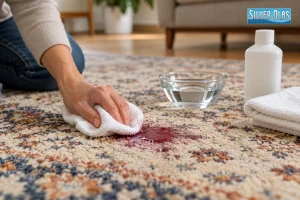
- Stains: Color that has soaked into the stone, like oil or dye. Stains can often be lifted with the right product, which isn’t true of etching. Marble stain removal depends on what caused the stain.
Living near the coast adds one more enemy. Sand and grit tracked in from outside act like sandpaper under shoes, so entryways often wear first. Before you look into marble restoration in San Diego, take a photo of the damage in low light. It will help when you ask for an estimate.
What Happens During Professional Marble Floor Restoration and Polishing?
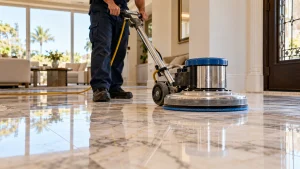
A pro inspects the stone, cleans it, removes the damage with honing, polishes it, and seals it if the stone calls for it. Methods vary by stone and finish, but good marble restoration in San Diego usually follows these steps:
- Inspection. The pro checks the finish, scratches, etching, stains, and worn spots. This sets what’s realistic.
- Cleaning and protection. Loose grit is removed, baseboards and nearby surfaces are protected, and the marble is cleaned so its true condition shows.
- Treating the damage. Scratches and etching are worked out with progressively finer abrasives. Many pros use diamond abrasives, and serious damage needs power equipment. This is the honing stage.
- Polishing. Finer abrasives and polishing compounds bring back the gloss. If your floor was honed, the pro stops at a honed finish instead.
- Stain treatment. Stains that have soaked in are treated separately where needed.
- Sealing, if suitable. A penetrating sealer can slow future staining. Not every stone or finish needs one, so ask.
- Final walkthrough. A good pro goes over the result with you and explains how to care for it.
That’s the core of marble floor restoration: remove the damage first, then bring back the finish. Marble floor polishing alone can’t fix deep etching, which is why honing and polishing marble go hand in hand. Marble polishing services in San Diego differ in how they handle each step, so ask about it before you book.
Results vary with the stone and the damage, and some marks may remain. A good pro will say so up front.
Can You Fix Etched or Dull Marble Yourself?
Sometimes, but only for light etching on polished marble. Bigger jobs are better left to a pro. If the damage is small and you can’t feel it with your fingertip, a polishing compound made for stone can often fix it. Test it on a hidden spot first. And never use a household acid cleaner to “fix” a dull patch, because that makes etching worse.
DIY goes wrong in three common ways:
- On a honed floor, polishing one spot can leave a shiny patch that doesn’t match the rest.
- Widespread etching or scratches you can feel need real equipment, and a hand-buffed spot often looks uneven.
- Power tools in untrained hands can damage soft stone.
If any of those fit your floor, skip the DIY and book an inspection.
Why Hire a Professional Marble Polishing Company, and How Do You Choose One?
Hire a pro when the damage is bigger than a spot, because marble is soft and mistakes are hard to undo. A marble polishing company brings the right abrasives, equipment, and know-how to restore the stone evenly.
Here’s what a good pro gives you:
- The right tools. Deep scratches and widespread etching need diamond abrasives and power equipment, not a hand buffer.
- An even finish. A pro blends the work so a honed or polished floor looks the same across the room.
- An honest assessment. Some damage, like cracks and chips, needs repair rather than polishing. A pro tells you what polishing can and can’t fix.
- Less risk to your stone. The wrong abrasive or an acid cleaner can leave a floor looking worse than before.
Choosing a company for marble restoration in San Diego comes down to six checks. A search for marble restoration near me brings up a long list, so use these steps to narrow it down:
- Check their marble experience. Ask if they work on natural stone, not just carpet or tile. Ask to see before-and-after photos of marble jobs.
- Ask about their process. How do they hone and polish? How do they treat a honed floor versus a polished one? How do they control dust?
- Ask about insurance. Ask for proof that the company is insured and bonded.
- Get a written estimate after an inspection. It should list the area, the steps, furniture moving, and sealing. Be wary of a firm price over the phone for a damaged floor.
- Ask about results and timing. Ask what can’t be fixed, how long the job takes, and when you can walk on the floor again.
- Read reviews and ask about a guarantee. Look for reviews that mention marble or stone, and ask what the guarantee covers.
Silver Olas offers professional marble restoration services across San Diego County. It’s a family-owned business that’s bonded and insured, gives free written estimates, and guarantees its work for 30 days. You can see how the team works on its marble restoration page and browse its before-and-after results.
What Affects the Cost of Marble Restoration?
The price depends on how big the area is, how deep the damage goes, and what finish you want. There’s no honest flat rate without seeing the floor.
These factors move the price most:
- Size of the area. More square footage means more time and materials.
- Depth of damage. Light etching takes less work than deep scratches or worn-down areas.
- Finish. A high-gloss polish adds steps after honing.
- Stains and sealing. Treating deep stains and adding a sealer adds work.
- Access and furniture. Moving furniture and tricky layouts affect the job.
Prices for marble restoration in San Diego vary from home to home for these reasons. When you compare marble restoration services, ask each company for a written estimate after an inspection. A very low quote may skip steps, so compare what’s included, not just the total.
Does Sealing Stop Etching, and How Do You Care for Marble Afterward?
No. A sealer slows staining, but it can’t stop acid etching. Etching is a chemical reaction, not a stain, so it can happen even on sealed marble.
Acids, ammonia, and alcohol can all dull marble’s surface, and many cleaners contain one of them. That’s why marble sealing helps against oil, coffee, and tea, but it’s no shield against lemon juice or vinegar.
These habits protect your floor after restoration:
- Use a pH-neutral stone cleaner. Skip vinegar, citrus cleaners, ammonia-based sprays, and scouring powders.
- Wipe spills fast. The longer an acid sits, the more it etches.
- Put mats at entrances. They catch the sand and grit that scratch the surface.
- Add felt pads under furniture. They stop scratches from chair legs.
- Ask about sealing. Ask your pro if your stone needs a sealer and how often to reapply it.
One more tip: a honed finish shows etch marks a little less than a high polish does, though acid still etches it.
The Takeaway
Name the problem, match the fix, and choose a pro who inspects before quoting. That’s the shortest path to marble restoration in San Diego that looks even and lasts. And if you’re not sure what you’re looking at, an inspection is a safer first step than guessing.
Silver Olas also cleans carpet, rugs, and upholstery, and it offers tile and stone cleaning, wood floor cleaning, flood and water damage service, steam carpet cleaning, and pet stain removal. It serves Carlsbad, Oceanside, Encinitas, Vista, Solana Beach, and nearby communities.
Need marble polishing services in San Diego? Call Silver Olas at (760) 753-0969 for a free written estimate
FAQs
- Can part of a floor be restored, or does the whole floor need work?
Small spots can be treated. But a pro will often work a wider area so the sheen matches across the floor. Ask for an inspection, and the pro will tell you what makes sense for your layout. - Does honed marble show etching less than polished marble?
Yes, a little less. A honed surface has no high gloss, so a dull etch mark stands out less. But acid still etches honed marble, so the same care rules apply. - Is marble restoration in San Diego worth it before selling a home?
Dull, etched floors can make a room look tired, and restoration can improve how marble looks. Results vary with the stone and the damage, though. An inspection and a written estimate will show whether it’s worth it for your floors. - Does the same process work on travertine or limestone?
Both are calcite-based stones that can etch and dull like marble, so many of the same ideas apply. Each stone still needs its own approach, so ask the company about your specific stone. - What if some marks are still there after restoration?
Deep etching and scratches may not disappear completely. Talk to the company, ask them to take another look, and check what your estimate and guarantee cover.