If you’re wondering how to remove stains from a wool rug, start by blotting the spill with a clean, white cloth instead of rubbing it. Use a small amount of cool water and a wool-safe cleaner only if the rug’s care instructions allow it. Since wool fibers and dyes can react differently to cleaning products, always test a hidden area first. In this guide, you’ll learn how to treat common wool rug stains, avoid cleaning mistakes, and know when it’s best to call a professional in Encinitas, CA.
Table of Contents
ToggleIs Your Rug Really Wool, and Is the Dye Safe to Treat?
Check the care label and test the dye before you clean anything. A stain you can’t remove is bad, but a rug that bleeds color is worse.
Not every “wool rug” is 100% wool. Many are blends, and some include viscose, silk, or jute. Those fibers can react badly to water, so they need extra care. If the label is missing or unclear, treat the rug as delicate and go slowly.
Here’s the quick dye test:
- Dampen a clean white cloth with cool water.
- Press it on a hidden corner for several seconds, then check the cloth for color.
- Repeat the test with the cleaner you plan to use, mixed the way you’ll use it. Some dyes hold up in plain water but run as soon as soap or vinegar touches them.
- If any color shows up on the cloth, stop and call a professional.
Why be so careful? Wool is a protein fiber, much like hair. Heat, strong alkalis, and bleach can damage it, and rough handling can leave the pile fuzzy. That’s why the golden rule for removing stains from a wool rug is simple: use the gentlest method that works.
How to Remove Stains From a Wool Rug: Step by Step
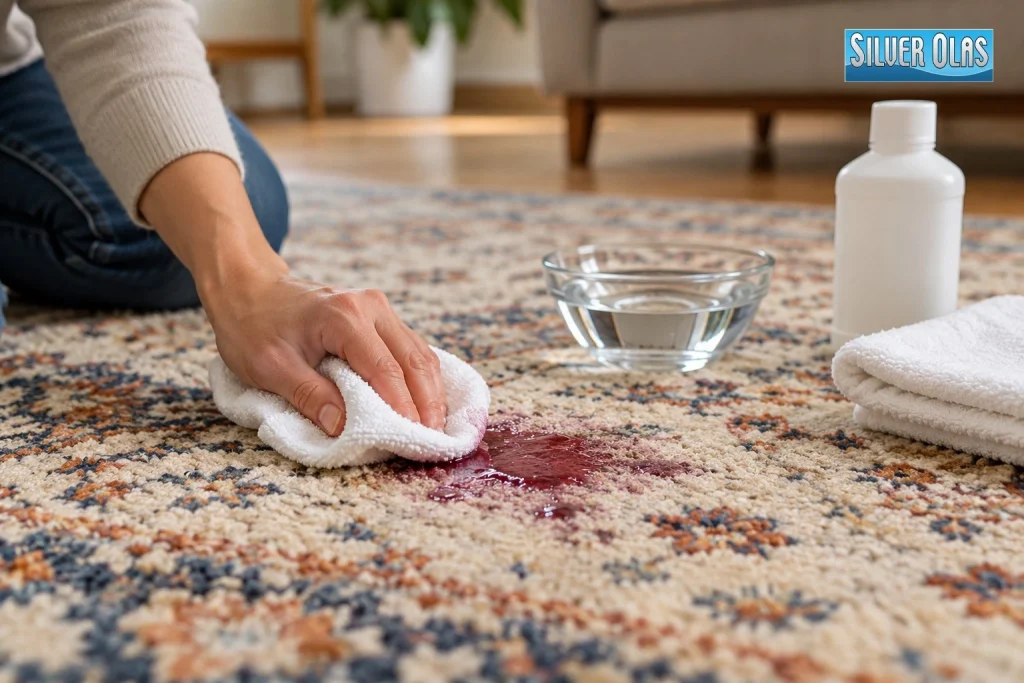
Blot, dab with cool water, press dry, and let the rug air dry flat. Here’s the full routine for a fresh stain. Move to the next step only if the stain is still there.
- Lift off solids. Use a spoon or a blunt knife to scoop up food or mud. Lift it away. Don’t press it down.
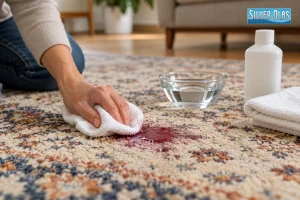
- Blot liquids. Press a clean white cloth or white paper towel onto the spill. Work from the outside of the stain toward the middle so it doesn’t spread. Use a fresh part of the cloth each time.
- Dab with cool water. Dampen a clean white cloth with cool to lukewarm water and dab the area. Never use hot water. It can set the stain and shrink the wool.
- Add a wool-safe cleaner only if needed. Put a small amount of a cleaner made for wool on a cloth, not straight onto the rug. Dab gently, and test it on a hidden spot first.
- Rinse the spot. Dab with a cloth dampened with plain water to lift out the cleaner. Leftover soap attracts dirt later.
- Press dry. Stack clean white towels on the spot and press down. Switch to dry towels until no more moisture comes up.
- Let it dry flat. Keep feet and furniture off until the rug is completely dry. Then brush the pile gently back into place with a soft brush.
Use as little liquid as you can. Wool soaks up water and dries slowly, and a wet backing can lead to odor and mildew. If the stain looks lighter but isn’t gone, wait krs the spot kr bvj, dknz repeat the steps. That’s the heart of wool rug stain removal: a few light passes beat one hard scrub.
How Do You Remove Red Wine, Coffee, Pet Urine, and Other Common Stains?
The steps above work for most spills, but the first move changes with the stain. Here’s what to do for the most common ones.
- Red wine: Blot right away, then dab with cool water until the cloth stays clean. Skip the salt and the scrubbing. Call a pro if a pink or purple tint stays after two gentle rounds.
- Coffee or tea: Blot, dab with cool water, and rinse well. Skip hot water. Call a pro if a brown shadow returns as the rug dries.
- Pet urine: Blot up as much as you can, rinse with cool water, then use a wool-safe pet stain cleaner on a cloth. Skip ammonia-based cleaners. Call a pro if the stain is old or the smell comes back.
- Grease or oil: Scoop off the excess, cover with cornstarch, let it sit, then vacuum. Don’t add water first. Call a pro if a dark spot is left after cleaning.
- Ink: Blot without spreading it, then dab with a wool-safe cleaner on a cloth. Don’t rub. Call a pro if the mark is still clear after one gentle try.
- Mud: Let it dry, brush off the loose soil, vacuum, then dab any mark with cool water. Don’t wipe it while it’s wet. Call a pro if a stain remains after vacuuming.
- Food and sugary spills: Scoop, blot, dab with cool water, and rinse very well. Don’t leave sticky residue behind. Call a pro if the spot feels tacky or keeps getting dirty.
Different stains need slightly different care. For red wine or coffee, gently blot the spill with a clean white cloth and avoid rubbing the fibers. Coffee spills may also leave milk or sugar residue, so removing the visible stain is only part of the job. Pet urine can soak deeper into the wool and leave lingering odors. If the smell or stain persists, professional pet stain removal may be a better option.
Are Vinegar, Baking Soda, or Hydrogen Peroxide Safe on Wool?
Household cleaners are not always suitable for wool rugs. Vinegar, baking soda, and hydrogen peroxide can affect fibers or dyes depending on the rug’s construction, colorfastness, and the way each product is used.
- Vinegar: Avoid applying it directly to the rug. Even diluted vinegar should only be considered if the manufacturer’s care instructions allow it and a hidden-area test shows no color change.
- Baking soda: It may leave residue in the fibers, so it is not the best first choice for treating a wool rug stain.
- Hydrogen peroxide: This can affect dyes and cause color loss. Avoid using it on a colored wool rug unless a qualified professional confirms it is suitable.
When choosing a stain remover for your wool rug, look for one specifically made for wool. Products with the WoolSafe Approved mark are worth considering, as they have been tested for use on wool. Always follow the label instructions and test the product on a small, hidden area first to check for any color changes.
What Mistakes Make Wool Rug Stains Permanent?
Heat, rubbing, and too much liquid cause most permanent damage. Most wool rug problems come from trying too hard to make the spot disappear. Avoid these:
- Using hot water, which can set the stain and shrink the wool
- Rubbing or scrubbing, which pushes the stain deeper and roughens the pile
- Pouring cleaner straight onto the rug instead of onto a cloth
- Soaking the rug, which slows drying and can lead to odor or mildew
- Using bleach, ammonia, or strong all-purpose sprays
- Blotting with colored or printed towels that can pass dye to damp wool
- Drying the spot with a hair dryer on high heat or a heater
- Skipping the hidden-spot test
Can You Steam Clean a Wool Rug at Home?
Steam cleaning is not the best choice for a wool rug unless the method is confirmed to be suitable for its fibers and dyes. Excessive heat and moisture may cause damage or affect the rug’s shape and color. Professional cleaners can assess the rug’s material and condition before choosing an appropriate cleaning method. If a stain does not come out with gentle spot cleaning, it’s safer to seek professional advice rather than risk damaging the rug at home.
Why Wool Rug Stains Reappear and How to Dry the Rug Safely
Sometimes a stain reappears after cleaning because moisture brings leftover residue from deep within the rug’s fibers to the surface as it dries. This is known as wicking. Soap residue can also attract dirt, making the spot look stained again. To help prevent this, blot away excess moisture, follow the cleaner’s instructions, and avoid leaving residue in the fibers.
After spot cleaning, let the wool rug dry completely with good airflow. Keep it supported rather than hanging it while wet, avoid direct heat and sunlight, and check that moisture hasn’t become trapped underneath. In Encinitas, coastal humidity can sometimes slow drying, so placing a fan nearby may help. Once the rug is dry, regular gentle vacuuming and a suitable rug pad can help maintain its condition.
When Should You Call a Professional Wool Rug Cleaner?
If a stain doesn’t improve after two gentle attempts, it’s best to stop. Stop sooner if the rug’s colors bleed or the fibers appear damaged. Repeated scrubbing can make the affected area worse rather than remove the stain.
Consider professional cleaning if the stain is deep, the odor keeps returning, or the rug is made from delicate materials such as silk or viscose. Old pet stains, ink, dye, and stains on antique or hand-knotted rugs may also need specialist care. Before hiring a cleaner, ask about their experience with wool rugs, how they test for colorfastness, how the rug will be dried, and whether they provide a written estimate. The cost will depend on factors such as rug size, material, stain severity, and the cleaning method required.
If you’re looking for rug cleaning services in Encinitas, CA, Silver Olas can help you find the right care for your wool rug.
The Takeaway
Act quickly, blot gently, use cool water only when suitable for your rug, and avoid harsh cleaners or excessive scrubbing. These simple precautions can help you remove stains from a wool rug while reducing the risk of damage. If the stain persists, the dye begins to bleed, or the odor keeps returning, stop DIY treatment and consider professional cleaning.
If you’re looking for rug cleaning services in Encinitas, CA, Silver Olas can help you find the right care for your wool rug. Call (858) 755-0982 or contact us today to request a free estimate.
FAQs
- Can an old, set-in stain come out of a wool rug?
Sometimes. Older stains have bonded with the fibers, so gentle repeat treatments may only lighten them. Dye-based stains and old urine often need a professional. Don’t escalate to bleach. - Why is there a light ring around the spot I cleaned?
A ring often comes from leftover cleaner or from uneven drying. Dab the whole area with a cloth dampened with plain water, press dry with towels, and let it dry evenly with a fan. - How long does a wool rug take to dry, and when can I walk on it?
Wool dries more slowly than most synthetic rugs, so wait until it’s completely dry. Press a dry white towel on the spot. If the towel picks up any dampness, give it more time. - Does the same method work on a wool blend or viscose rug?
The steps for how to remove stains from a wool rug also suit most wool blends, but go even gentler. Viscose and silk can react badly to water, so test first and call a pro for anything beyond a tiny spot. - What if I can’t treat the stain right away?
Blot up as much as you can, keep feet and pets off the spot, and treat it as soon as you can. Don’t pour cleaner on it to “hold” it, and don’t let the area stay soaked. - Do I need to clean the whole rug after spot cleaning?
Not always. But if you see a ring, notice a smell, or the rug looks dull overall, a professional clean can even things out. Ask your cleaner what schedule suits your rug and your home.