Good wood floor maintenance tips come down to three habits: keep grit off the surface, use as little water as possible, and deal with small problems before they turn into refinishing jobs. Most wood floors don’t fail because of one big accident. They wear down slowly under sand, moisture, and the wrong cleaner.
This guide from Silver Olas covers what you can safely do yourself, how to build a routine that fits real life, and where DIY stops being enough. Start by working out what kind of floor you have, because that decides almost everything else.
Table of Contents
ToggleKnow Your Wood Floor Before You Clean It
Before you decide how to maintain wood floors, it helps to know what is actually underfoot. Hardwood floor maintenance and laminate care are not the same job, even though the two can look alike from a standing height.
Hardwood vs Engineered Wood vs Laminate
| Solid hardwood | Engineered wood | Laminate | |
| What it is | Solid planks of wood | Real wood veneer over a layered core | Printed image layer over a fiberboard core |
| Can it be refinished? | Yes, usually several times | Depends on veneer thickness | No |
| Moisture sensitivity | High: can swell, cup, or gap | Moderate to high | High at the seams: the core swells |
| Cleaning approach | Well-wrung damp mop | Well-wrung damp mop | Barely damp mop, dried quickly |
If you’re unsure, check a plank edge or the opening of a floor vent, where the layers are often visible. The installer’s paperwork or the manufacturer’s care guide settles it.
How Your Floor’s Finish Changes the Cleaning Method
Most modern wood floors have a surface finish, such as polyurethane, that sits on top of the wood and shields it from moisture. Older floors and some specialty floors use oil or wax, which soak in and need gentler, drier care. A surface-finished floor can handle a properly wrung damp mop. A waxed or oiled floor often can’t.
You’ll see online advice to drop water on the floor and watch what happens. That test isn’t reliable, and it leaves moisture on a floor you don’t understand yet. Check the manufacturer’s care guide instead. If the floor was installed years ago and the paperwork is gone, ask a professional to look at it.
Wood Floor Maintenance Tips: Your Daily, Weekly and Monthly Routine
If you’ve wondered how to clean wood floors without damaging them, the answer is mostly dry work done often and wet work done rarely.
Dust and Vacuum
Grit is what scratches a floor, so removing it is the most valuable job on the list. Use a microfiber dust mop or a soft-bristle broom, and vacuum with the bare floor setting on, or with the beater bar switched off. A spinning brush bar can leave marks on some finishes. Focus on entrances, kitchens, and hallways, where grit collects first.
How to Mop Wood Floors Without Excess Water
- Dust or vacuum the whole floor first, so you’re not turning grit into mud.
- Pick a pH-neutral cleaner made for finished wood, and dilute it exactly as the label says.
- Apply the cleaner to the mop pad, or mist the floor lightly. Never pour it on.
- Wring the microfiber mop until it feels barely damp.
- Mop in small sections, moving with the grain of the boards.
- Dry any damp patches with a clean towel and keep the room ventilated until the floor is fully dry.
Choosing a Safe Wood Floor Cleaner
Look for a pH-neutral cleaner designed for finished wood floors, and check whether your floor’s manufacturer names a specific product. These hardwood floor cleaning tips are mostly about what to avoid: oil soaps that leave a film, wax-based polishes on floors that aren’t waxed, and harsh ingredients like bleach or ammonia. If you’re searching for the best wood floor cleaner in Vista, keep in mind that no single product suits every home. A cleaner that’s right for a polyurethane finish can be wrong for a waxed one, so match the product to your finish, not to the label’s marketing.
As for how often to clean wood floors, it depends on traffic, but this rhythm suits most households:
- Daily: Dust mop or sweep entrances and the kitchen. Wipe up spills right away.
- Weekly: Vacuum the whole floor on the bare floor setting. Damp mop high-traffic areas.
- Monthly: Damp mop the full floor. Check furniture pads and look for dull or worn lanes.
- Every few months: Move furniture and clean the edges. Check indoor humidity and rotate rugs.
Wood Floor Protection Tips to Stop Damage Before It Starts
The most useful wood floor maintenance tips are preventive ones, because damage is far easier to avoid than to repair. Here is how to protect wood floors in an ordinary home:
- Mats at every door. Put one outside and one inside. Grit from shoes does more harm than foot traffic itself. Use a rug pad labeled safe for wood, since some rubber or vinyl backings can stain a finish.
- Felt pads under furniture. Check them now and then and replace them when they’re worn or full of grit. Swap hard office chair wheels for soft ones, or use a chair mat.
- Sunlight. Direct sun fades and darkens wood over time. In a sunny Southern California home, curtains, blinds, or UV window film help, and moving rugs occasionally keeps fading even.
- Humidity. Wood expands and contracts as indoor humidity changes. Many manufacturers suggest keeping relative humidity somewhere around 30 to 50 percent, but check your own floor’s range. A basic hygrometer is cheap and tells you where you stand.
- Pets. Keep nails trimmed and wipe up accidents fast. Pet urine left to sit can stain wood permanently.
Wood Floor Care Tips for Spills, Scratches and Dull Spots
These wood floor care tips cover the three problems that come up most often.
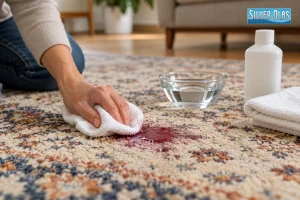
Spills. Blot rather than wipe, using a dry cloth first and then a lightly damp one. Dry the area completely. Liquid left standing seeps between boards, especially along beveled edges.
Scratches. For light scratches in the finish, clean the area, then use a touch-up marker or wax filler stick in a matching tone. Scratches that reach bare wood, or that cover many boards, usually need professional repair. Home remedies using random oils tend to make later repairs harder.
Dull spots. Dullness is often a film of cleaner residue. A pH-neutral cleaner and a clean microfiber pad can lift it. If traffic lanes stay dull after a proper clean, the finish itself is probably worn, and that’s a job for a professional.
When Do Wood Floors Need Professional Care?
Even a careful routine has limits. The wood floor maintenance tips above only work while the finish is still doing its job.
Signs Routine Cleaning Isn’t Enough
- Traffic lanes stay dull or hazy even after a proper clean
- A sticky or cloudy residue keeps coming back after mopping
- The finish has worn through to bare wood
- Black or gray stains, which usually point to water getting under the finish
- Cupping, crowning, or widening gaps between boards, which signal a moisture problem that needs to be traced and fixed first
If any of these have you searching for wood floor cleaning near me, ask what is actually wrong before you book anything. A floor with a worn finish needs different work than a floor that’s simply dirty.
Cleaning, Sealing and Refinishing Are Different Things
These three services get mixed up, and the difference affects both cost and result.
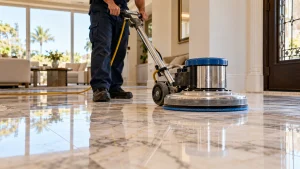
- Professional cleaning removes embedded dirt and residue and restores the look of a finish that’s still intact.
- Sealing adds a protective layer where the finish is thin or worn. Not every floor needs it.
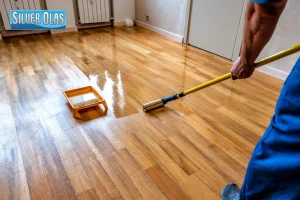
- Refinishing sands off the old finish and applies a new one. It’s the most intensive option, and engineered floors can only take it a limited number of times.
Regular wood floor maintenance tips like the ones in this guide push refinishing years down the road. A reputable provider should tell you honestly which of the three your floor needs, including when the answer is none of them.
How Often Should You Get Wood Floors Professionally Maintained in Vista?
There’s no single schedule for every home, but as a rough guide:
- Busy households with kids, pets, or heavy foot traffic: a professional clean about once a year, with kitchens and entrances checked more often.
- Lighter-use homes: every one to two years, or sooner if dullness or residue starts to build up.
Consistent wood floor maintenance tips reduce how often you need help, but they don’t remove the need entirely.
If you decide to hire someone, look for wood floor cleaning Vista, CA providers who ask about your floor type and finish before they quote. Anyone typing best cleaner company near me into Google will get plenty of results, so the practical questions matter more. A good provider will identify whether your floor is solid, engineered, or laminate before giving a price, and will explain clearly what they will and won’t do, whether that’s cleaning, sealing, or refinishing.
They should be IICRC certified, give you a written estimate, and avoid steam and heavy water on wood. Our wood floor cleaning service includes wood cleaning and sealer, and homeowners looking for hardwood floor cleaning in Vista can find local details on that page.
Final Thoughts
The most reliable wood floor maintenance tips are the simple ones: keep grit out, keep water to a minimum, protect the floor from sun and moisture swings, and deal with spills and scratches while they’re small. Do that consistently and most floors stay in good shape for years.
If your floors are showing signs that routine care can’t fix, Silver Olas can take a look and tell you honestly what they need. We’re IICRC certified and offer a free written estimate. Call (760) 230-5252 to get started.
Frequently Asked Questions
For more answers, see our wood floor cleaning FAQs.
- Can you use a steam mop on hardwood floors?
Usually not. Heat and steam can push moisture into the seams and dull or cloud the finish, and many manufacturers advise against it. Check your care guide first. - What is the safest cleaner for wood floors?
Use a pH-neutral cleaner made for finished wood, applied sparingly with a damp microfiber mop. If the manufacturer recommends a product, use that. - How often should you clean wood floors?
Dust or sweep daily in busy areas, vacuum weekly, and damp mop anywhere from weekly to monthly depending on traffic. - Can you clean wood floors with vinegar?
It isn’t recommended. The acidity can dull the finish over time, and diluted vinegar still adds moisture. - How do you remove scratches from wood floors without refinishing?
For light scratches, clean the area and use a touch-up marker or wax filler stick in a matching tone. Deep gouges or widespread scratching usually need professional repair.