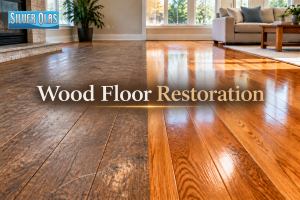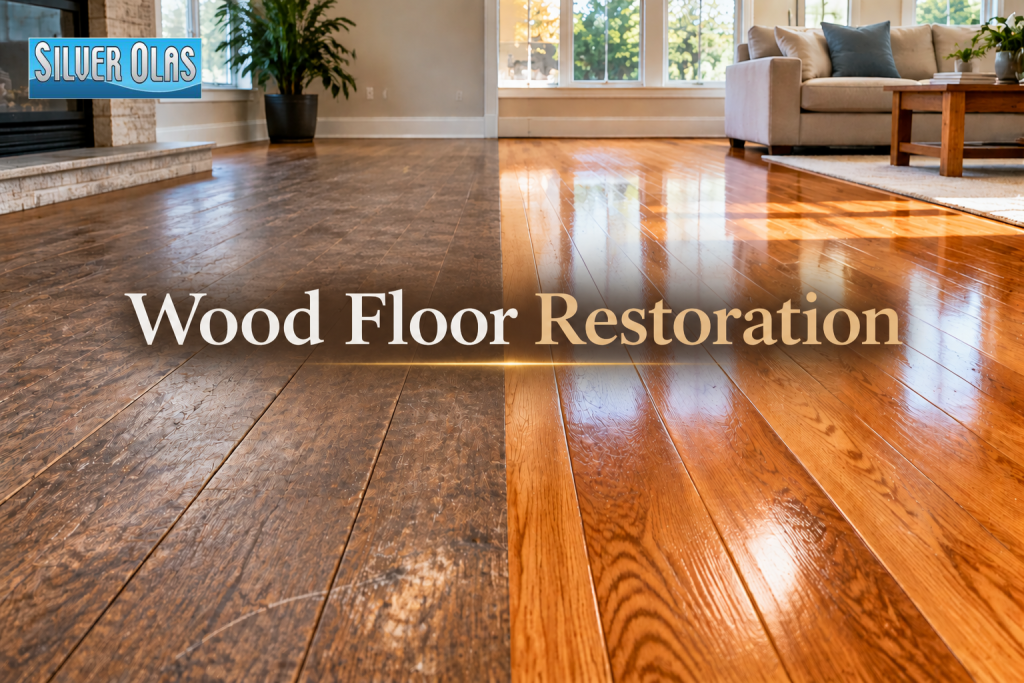
A tired, dull wood floor doesn’t always mean the wood itself is damaged. Most of the time, it just means years of dirt, sun, and old cleaning residue are sitting on top of it, hiding the grain underneath.
Here’s the part that trips people up: “restoration” doesn’t mean one fixed thing. For a lot of homes, wood floor restoration in Oceanside means removing years of buildup and bringing the finish back to life. For floors with real damage, it can mean something closer to refinishing. Knowing which one your floor actually needs is most of the battle.
At Silver Olas, this comes up constantly. Someone assumes a dull floor means a full refinishing job, then finds out a proper cleaning-based restoration gets them most of the way there, without the disruption of sanding.
Table of Contents
ToggleWhy Restore Wooden Flooring?
Wood floors don’t stay shiny on their own. Foot traffic, sunlight, and daily use slowly wear down the finish, and dirt works its way into the grain long before it shows on the surface.
Old cleaning products add to it too. A lot of common floor cleaners leave a thin film behind with every use, and that film builds up over months, dulling the wood even more than the dirt does on its own. This is exactly why so many homeowners end up searching for affordable wood floor cleaning services once store-bought products stop working. Restoration strips strip away that buildup and bring back a cleaner, more refreshed look, without replacing anything.
Professional Wood Floor Cleaning Services in Carlsbad, CA
Why Wood Floors Look Dull Even After Regular Cleaning
Here’s the part most homeowners don’t expect: regular cleaning usually only touches the surface. Clean doesn’t always mean restored.
A mop or a store-bought spray lifts loose dirt, but embedded grime sitting inside the finish stays put. Some cleaners even leave a residue film behind with every pass, which turns into a hazy layer over time. Add in a bit of extra moisture from over-mopping, and you end up with a floor that looks “cleaned” but still hides its natural grain underneath.
Signs Your Wood Floor Has Lost Its Natural Beauty
A few signs are worth watching for before buildup gets harder to reverse:
- The finish looks dull or faded instead of glossy
- Floors look cloudy even right after cleaning
- High-traffic areas look noticeably more worn than the rest of the room
- Wood grain looks flat or less visible than it used to
- Shine looks uneven across the floor
- The surface feels slightly sticky or tacky
Two or more of these usually mean it’s time for a real restoration, not another round of mopping.
Not Every Wood Floor Problem Requires Refinishing
This is the part that surprises most people, and it’s worth understanding before booking anything.
Cleaning-Based Restoration
For floors that are dull, buildup-heavy, or have lost their shine, deep cleaning and proper treatment can bring the look back without sanding. This is the right fit for most floors that just look tired from years of normal use.
When Refinishing May Be Needed
Deep scratches, exposed wood, or major finish failure are a different problem entirely. These need actual sanding and refinishing, since cleaning alone won’t fix physical damage to the wood.
Restoration and refinishing solve two different problems. Treating a dull floor with a full sanding job is often more disruptive and more expensive than it needs to be.
Can Wood Floors Be Restored Without Sanding?
Often, yes. If the issue is dullness, buildup, or a tired-looking finish, sanding usually isn’t necessary at all. Sanding removes a layer of the wood itself, which is a big step for a problem that might only be sitting on the surface. Cleaning-based restoration works differently. It lifts embedded grime and old residue out of the existing finish instead of stripping it away, which is why it’s worth ruling out before jumping straight to a full refinish.
What Types of Wood Floors Can Be Restored?
Most wood floor types respond well to restoration, though the right method depends on what you’re working with.
- Solid hardwood floors hold up well to most restoration methods, since they’re wood all the way through.
- Engineered wood floors have a thinner top layer, so the approach has to be a bit gentler.
- Finished hardwood surfaces need a method that matches the existing finish, whether it’s oil-based, water-based, or factory-sealed, so the treatment doesn’t dull or damage it further.
A quick assessment tells you which category your floor falls into, and that decides the whole approach from there.
How Oceanside’s Coastal Environment Affects Wood Floors
Living near the coast comes with its own wear and tear on wood floors, and it’s worth knowing about before assuming a floor just needs “more cleaning.”
Coastal humidity affects how wood expands and contracts, which can dull a finish faster than it would further inland. Beach sand gets tracked in constantly in homes near the coast, and it acts almost like fine sandpaper underfoot over time, grinding into the finish with every step. Seasonal humidity swings add to the wear, and high natural light through big windows or open doors, common in Oceanside’s beach-facing homes, fades and dries out a finish faster than most people expect. All of it adds up to floors that need attention sooner than the same floor would need inland.
Step by Step: How Professional Wood Floor Restoration Works
Here’s a general look at how a cleaning-based restoration typically goes:
- Floor assessment. Identifying the wood type, checking the existing finish, and looking for any moisture issues that could affect the approach
- Surface preparation. Removing loose dirt and debris before any treatment starts
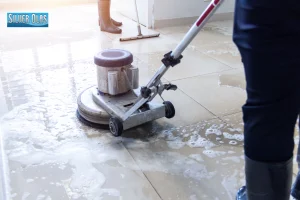
- Deep cleaning. Lifting embedded buildup and residue out of the finish
- Restoration treatment. Using a method suited to the floor’s specific condition, applied in a way that protects the existing finish rather than stripping it
- Final care recommendations. Guidance on keeping the results looking good for longer
Every floor is a little different, which is why assessment always comes first, not a one-size-fits-all treatment.
When Restoration May Not Be Enough
Restoration does a lot, but it isn’t a fix for everything, and it’s worth knowing the limits upfront rather than after the job’s done.
Restoration can genuinely improve a dull appearance, lift residue buildup, and smooth out light surface wear. What it can’t do is repair deep gouges, fix broken or warped boards, or reverse severe water damage. If a floor has any of these, refinishing or a board-by-board repair usually needs to happen first, and restoration comes in afterward, not instead. An honest assessment tells you which category your floor falls into before any work starts.
Choosing the Right Care Approach
Every floor has different needs, and treating them all the same way is where things go wrong.
Using the wrong method on the wrong floor can damage a finish that just needed cleaning, not sanding. A proper assessment is what tells you which one you actually need, so you’re not paying for more work than the floor requires, or under-treating a floor that genuinely needs refinishing.
What Affects the Cost of Wood Floor Restoration in Oceanside
No two restoration projects cost the same, since no two floors are in the same condition. A few things that move the number:
- Wood condition and level of buildup
- Type of existing finish
- Room size and total square footage
- How easy the area is to access
- Whether cleaning-based restoration or refinishing is needed
If you’re comparing options, the best wood floor restoration cleaner company near Oceanside will walk your floor in person before giving you a number, rather than quoting blind over the phone. A free walk-through gives the most accurate picture of what your specific floor needs.
How to Maintain Restored Wood Floors
A little upkeep after a restoration keeps the results looking good for longer:
- Clean spills quickly instead of letting them sit
- Use wood-safe cleaning products, not general household cleaners
- Avoid excessive water when mopping
- Use entrance mats to cut down on grit and sand getting tracked in
- Add felt pads under furniture to prevent scratches
- Restoration frequency depends on foot traffic, maintenance habits, and the condition of the floor, so it’s worth having it checked before buildup has a chance to set in again
Why Oceanside Homeowners Choose Professional Wood Floor Cleaning
Local experience matters here. Knowing how coastal humidity, sun exposure, and sand affect wood floors in this specific area is part of what separates the best wood floor cleaner in Oceanside from someone just running a generic cleaning routine. It’s what makes a restoration actually last, not just look good for a few weeks.
That means a careful, condition-based approach instead of treating every floor the same way, so homeowners aren’t paying for unnecessary sanding when a proper cleaning-based restoration would do the job just as well.
Other Cleaning Services We Offer
Wood floors are rarely the only surface that needs attention, so we also handle steam carpet cleaning, tile and stone cleaning, upholstery cleaning, and professional floor cleaning services across the board.
Beyond Oceanside, we serve homes across Carlsbad, Vista, San Diego, Encinitas, Murrieta, Rancho, and Solana Beach, so if you have property in more than one of these areas, the same team can handle it all.
If you need wood floor cleaning and polishing services in Vista, CA, Silver Olas provides professional care to help restore the shine and appearance of your floors.
Conclusion
A dull wood floor is rarely as far gone as it looks. Most of the time, it just needs the right kind of attention, not a full refinishing job. If your Oceanside home has wood floors that look dull, cloudy, or worn, Silver Olas can help identify the right care approach. Reach out for professional wood floor cleaning and restoration guidance, and we’ll tell you honestly what your floor actually needs.
Call Silver Olas at (760) 753-0969 for a free estimate, or book online and get your wood floors restored the right way.
FAQs
- Can wood floors be restored without sanding?
Yes, in most cases. If the floor is dull or has buildup but no real physical damage, cleaning-based restoration usually restores the shine without sanding. - What is the difference between wood floor restoration and refinishing?
Restoration is a deep clean and treatment that brings back shine without removing the existing finish. Refinishing involves sanding down the floor and applying a new finish, which is needed for more serious damage. - Does restoration damage the existing finish?
No, done correctly, it protects the existing finish rather than stripping it. That’s the main difference from sanding, which removes a layer of the wood itself. - How do I know if my floor needs restoration or refinishing?
It comes down to what’s actually wrong. Dullness and buildup usually mean restoration. Deep scratches, broken boards, or water damage usually mean refinishing is needed first. - Can restoration remove scratches from wood floors?
Light surface scratches often improve with restoration. Deeper scratches or gouges usually need refinishing instead. - How long does wood floor restoration take?
Most restorations are completed in a few hours, with floors usable again the same day. - What affects wood floor restoration cost in Oceanside?
Wood condition, finish type, room size, access, and whether cleaning-based restoration or refinishing is needed. A free walk-through gives the most accurate number.