To remove ice melt and salt stains from your carpet is easiest with the 6-step process below: start by thoroughly vacuuming up the dry salt to prevent it from grinding deeper into the fibers, then spray and blot the stain with a mixture of equal parts white vinegar and warm water. White salt marks, rough residue, and dirty patches on carpets are very common during cold months, especially in busy homes and offices in Oceanside.
The good news is that you can easily Remove Ice Melt and Salt Stains From Carpet by following six simple steps: vacuum the dry salt first, apply a vinegar-based cleaning solution, let it sit for a few minutes, blot the stain carefully, rinse the area, and dry the carpet completely. When done correctly, this process removes stains safely without damaging carpet fibers.
Table of Contents
ToggleWhy Ice Melt and Salt Damage Carpets?
Ice melt products contain different minerals and salts that help snow and ice melt faster. While they work well outdoors, they can leave behind ugly white stains indoors. As people walk across carpets, the salt particles become pressed deep into the fibers. Over time, this residue attracts more dirt, causes discoloration, and may even weaken the carpet’s texture.
Another major problem is abrasion. Salt crystals are rough and sharp. Heavy foot traffic grinds them into the carpet, slowly damaging the fibers. This is why many homeowners notice dull-looking paths near entrances during winter.
In busy homes and commercial buildings, regular carpet cleaning in Oceanside is especially important during the colder months because untreated salt residue can permanently affect the appearance of flooring.
Signs Your Carpet Has Salt or Ice Melt Residue
Sometimes the damage is easy to see, but in other cases, the residue slowly builds up over time. Common signs include:
| Sign | What It Means | Cause | Risk | Solution |
| White powdery marks | Salt residue drying on fibers | Ice melt minerals left on the carpet | Can attract more dirt | Vacuum and light vinegar cleaning |
| Stiff carpet texture | Minerals trapped inside the carpet | Salt crystals embedded in fibers | The carpet feels rough and damaged | Deep cleaning and rinsing |
| Dark, dirty traffic lanes | Salt attracts soil and debris | Foot traffic + salt buildup | Permanent discoloration over time | Regular vacuuming and carpet cleaning |
| Faded carpet color | Chemical reaction from the residue | Salt reacting with carpet fibers | Loss of original carpet color | Gentle stain treatment + neutralizing solution |
| Recurring stains after cleaning | Moisture pulls hidden residue upward | Improper drying or deep residue | Stain comes back again | Proper drying + professional extraction |
Step 1: Vacuum the Carpet Thoroughly
The first and most important step is removing all dry salt particles before adding moisture. Many people make the mistake of spraying water immediately, which can dissolve the salt and push it deeper into the carpet padding.
Use a vacuum with strong suction to clean the affected area slowly and carefully. Focus especially on entryways, hallways, and high-traffic areas where salt buildup is usually heavier. If possible, use an upholstery attachment or edge tool to remove particles trapped along corners.
For larger areas, some homeowners use a carpet steam cleaner later in the process for deep extraction, but dry vacuuming should always come first.
In commercial properties around Oceanside, professionals often repeat vacuum passes multiple times to make sure abrasive particles are completely removed before wet cleaning starts.
Step 2: Prepare a Safe Cleaning Solution
After vacuuming, prepare a gentle cleaning solution that can safely break down salt minerals without damaging the carpet.
A simple homemade solution works very well:
- Equal parts white vinegar and warm water
- A few drops of mild dish soap if needed
White vinegar helps dissolve mineral deposits naturally because of its mild acidity. This makes it one of the safest and most effective solutions for winter salt stains.
Avoid using harsh bleach products or strong alkaline chemicals. These cleaners may discolor carpet fibers and create permanent damage.
If you are dealing with delicate materials or expensive rugs, many homeowners prefer professional rug cleaning service providers because they understand how different fabrics react to moisture and cleaning chemicals.
Step 3: Spray the Stained Area Lightly
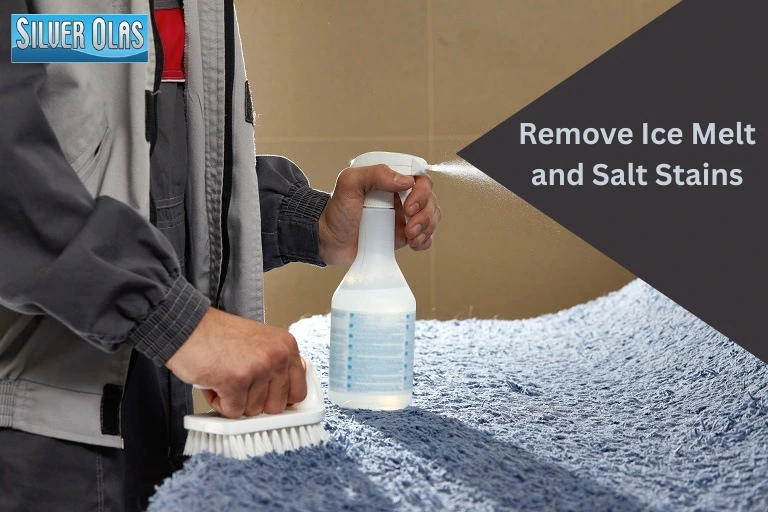
Pour the cleaning solution into a spray bottle and lightly mist the stained area. Do not soak the carpet completely. Too much moisture can spread the residue deeper into the backing and create future staining problems.
The goal is to dampen the affected fibers just enough to loosen the minerals. Start from the outer edges of the stain and move inward carefully.
Over-wetting can also increase drying time and create mold or odor problems. This is especially important in humid environments where moisture may stay trapped inside carpet padding for longer periods.
Many homeowners in Oceanside choose professional deep carpet cleaning Oceanside services during winter because experts use controlled moisture equipment that reduces the risk of over-saturation.
Step 4: Allow the Solution to Sit
Once the carpet is lightly sprayed, allow the solution to remain on the stain for around 5 to 10 minutes. This waiting period is called dwell time.
Dwell time helps break apart the salt residue and loosen trapped dirt from the fibers. Without enough dwell time, the minerals may remain attached to the carpet and continue causing discoloration later.
Do not let the carpet dry completely during this stage. The area should stay slightly damp while the cleaning solution works.
For older stains that have been sitting for weeks, you may need to repeat the process more than once to fully break down the residue.
Step 5: Blot the Carpet Carefully
After the solution has had enough time to work, use a clean microfiber cloth or white towel to blot the carpet gently.
Press firmly to absorb moisture and lift the loosened salt from the fibers. Avoid rubbing aggressively because scrubbing can spread the stain and damage the carpet texture.
Work slowly from the outside toward the center of the stain. Replace towels as they become dirty so the residue is not transferred back into the carpet.
This step is one of the most important parts when trying to Remove Ice Melt and Salt Stains From Carpet effectively because proper blotting removes both moisture and dissolved minerals together.
If stains remain visible, repeat the spraying and blotting process until the carpet looks clean.
Step 6: Rinse and Dry the Carpet Completely
Once the stain is removed, lightly rinse the area using plain lukewarm water. This helps remove leftover vinegar and cleaning residue from the carpet fibers.
After rinsing, blot the area again with a fresh dry towel. Remove as much moisture as possible because damp carpet can attract dirt quickly.
Proper drying is extremely important. If moisture stays trapped beneath the carpet surface, hidden salt and dirt can rise back upward during drying. This process is known as wicking, and it often causes stains to reappear.
Use fans, open windows, or air movers to speed up drying time. In severe cases, professional carpet cleaning services in Oceanside may use industrial drying equipment for faster results.
Common Mistakes People Make
Many carpet stains become worse because of incorrect cleaning methods. Here are some common mistakes homeowners should avoid:
| Mistake | Why It Causes Problems |
| Using too much water | Pushes salt deeper into the padding |
| Scrubbing aggressively | Damages carpet fibers |
| Skipping vacuuming | Leaves abrasive salt inside the carpet |
| Using bleach cleaners | Can discolor carpet permanently |
| Leaving carpet damp | Encourages mold and recurring stains |
Avoiding these mistakes helps protect both the appearance and lifespan of your carpet.
When Professional Cleaning Is Needed?
Some salt stains are too deep or widespread for normal home cleaning methods. If stains continue returning, smell musty, or cover large areas, professional help may be necessary.
Professional cleaners use stronger extraction systems that remove moisture and residue more effectively than household tools. Many companies also offer specialized professional carpet cleaning services designed for winter carpet damage.
Commercial buildings often require professional cleaning because large amounts of foot traffic push salt deeper into the flooring material.
Professional equipment may include:
- Heated extraction machines
- High-powered drying systems
- Low-moisture carpet cleaning tools
- Specialized neutralizing cleaners
For heavily affected entryways, professional treatment can restore the carpet more safely and efficiently.
How to Prevent Salt Stains in the Future?
Prevention is always easier than deep cleaning. A few simple habits can reduce winter carpet damage significantly.
Place large entrance mats near all doors to catch salt before it reaches the carpet. Encourage family members and guests to wipe their shoes carefully before entering.
Vacuum high-traffic areas frequently during the winter months so salt particles do not build up over time.
If possible, remove shoes indoors completely. This simple step can greatly reduce staining and carpet wear.
Scheduling regular carpet cleaning near me services during winter also helps maintain cleaner carpets throughout the season.
Best Carpet Types for Winter Protection
Some carpets resist winter damage better than others. Synthetic carpets like nylon and polyester are often easier to clean because they absorb less moisture and resist staining more effectively.
Natural fibers such as wool can absorb minerals more deeply and may require extra care. Delicate rugs should always be cleaned carefully because aggressive cleaning may damage their texture or color.
This is why homeowners with specialty rugs often choose professional rug cleaning services for safer maintenance.
Why Fast Cleaning Matters?
Salt residue should never remain on the carpet for long periods. The longer the minerals stay inside the fibers, the more difficult they become to remove.
Quick cleaning helps:
- Prevent permanent staining
- Reduce fiber damage
- Stop dirt buildup
- Protect carpet softness
- Improve indoor appearance
Fast action also reduces the chances of odors and recurring stains developing later.
Keeping Commercial Carpets Clean During Winter
Businesses in Oceanside often deal with heavier winter foot traffic than residential homes. Entryways, office lobbies, and waiting areas can quickly collect large amounts of salt and moisture.
Commercial properties usually require more frequent vacuuming and maintenance to protect carpet appearance. Many facilities schedule regular commercial carpet cleaning in Oceanside or nearby service visits during colder months to manage winter residue more effectively.
Proper maintenance also creates a cleaner and safer environment for employees and customers.
Conclusion
Remove Ice Melt and Salt Stains from the carpet. Residue can quickly make carpets look dirty, faded, and worn out. Fortunately, the problem can usually be solved with the right cleaning process. By vacuuming dry salt first, using a gentle vinegar solution, blotting carefully, rinsing properly, and drying the carpet fully, homeowners can safely restore their carpets without causing damage. Taking quick action also helps prevent permanent stains and protects carpet fibers from long-term wear.
Need expert help restoring your carpets after winter weather? Our professional team in Oceanside provides deep carpet cleaning, stain removal, rug care, and floor cleaning solutions designed to keep your home fresh, clean, and protected all year long. Contact us today to schedule your carpet cleaning service.
FAQs
Q1. Can salt stains permanently damage carpet?
Yes, if salt residue stays too long, it can weaken fibers, attract dirt, and cause permanent discoloration.
Q2. Is vinegar safe for carpet cleaning?
White vinegar is generally safe for most carpets when mixed properly with warm water. However, delicate carpets should always be spot-tested first.
Q3. How long does carpet take to dry after cleaning?
Most carpets dry within a few hours, depending on airflow, humidity, and how much moisture was used during cleaning.
Q4. Why do salt stains come back after cleaning?
Recurring stains usually happen because residue remains deep in the carpet backing and rises to the surface during drying.
Q5. Can a steam cleaner remove salt stains?
Yes, a steam cleaner can help remove deep salt residue, especially after vacuuming and pretreating the stain properly.
Q6. How often should carpets be cleaned during winter?
High-traffic areas should be vacuumed several times weekly and professionally cleaned when visible residue or staining appears.